insights from SHU students’ research
Today’s young adults didn’t make the individual, corporate, and policy choices that have driven climate change for decades. But the consequences of a warming world are now their problem. And most of them know it: In 2021, a survey showed that 75% of Americans aged 16-25 were at least moderately worried about climate change, and 26% were so worried that it impacted their ability to function (Hickman et al, The Lancet Planetary Health, 2021).
But does worry correlate with knowledge and action among this group? Over the past few months, three Seton Hall University (SHU) seniors collaborated with Meat Me In The Middle (MMITM) to learn whether environmental considerations play a role in SHU students’ food choices. Their work was overseen by Dr. Jacob Weger, Lecturer and Director of SHU’s Environmental Studies Program.
The seniors—Roselyn Figueroa, Tamiya Robinson, and Elizabeth Cantrell—conducted a survey of 203 members of the SHU community. Their survey included several questions that mirrored those in MMITM’s own survey of adults in the larger New Jersey community of Maplewood and South Orange (where SHU is located). They found some intriguing contrasts between the 171 respondents age 18-24 in their survey, and the 594 respondents age 25 years and older in MMITM’s survey.
high meat consumption among students
Members of the younger group—who fit squarely into the generation popularly known as “Gen Z”—were more likely than members of the older group to eat meat (defined as beef, pork, lamb, and/or poultry). 95% of the 18- to 24-year-olds indicated they eat meat, compared to 86% of the group aged 25 and older.
The student cohort was also much less likely to have ever considered cutting back on eating meat.
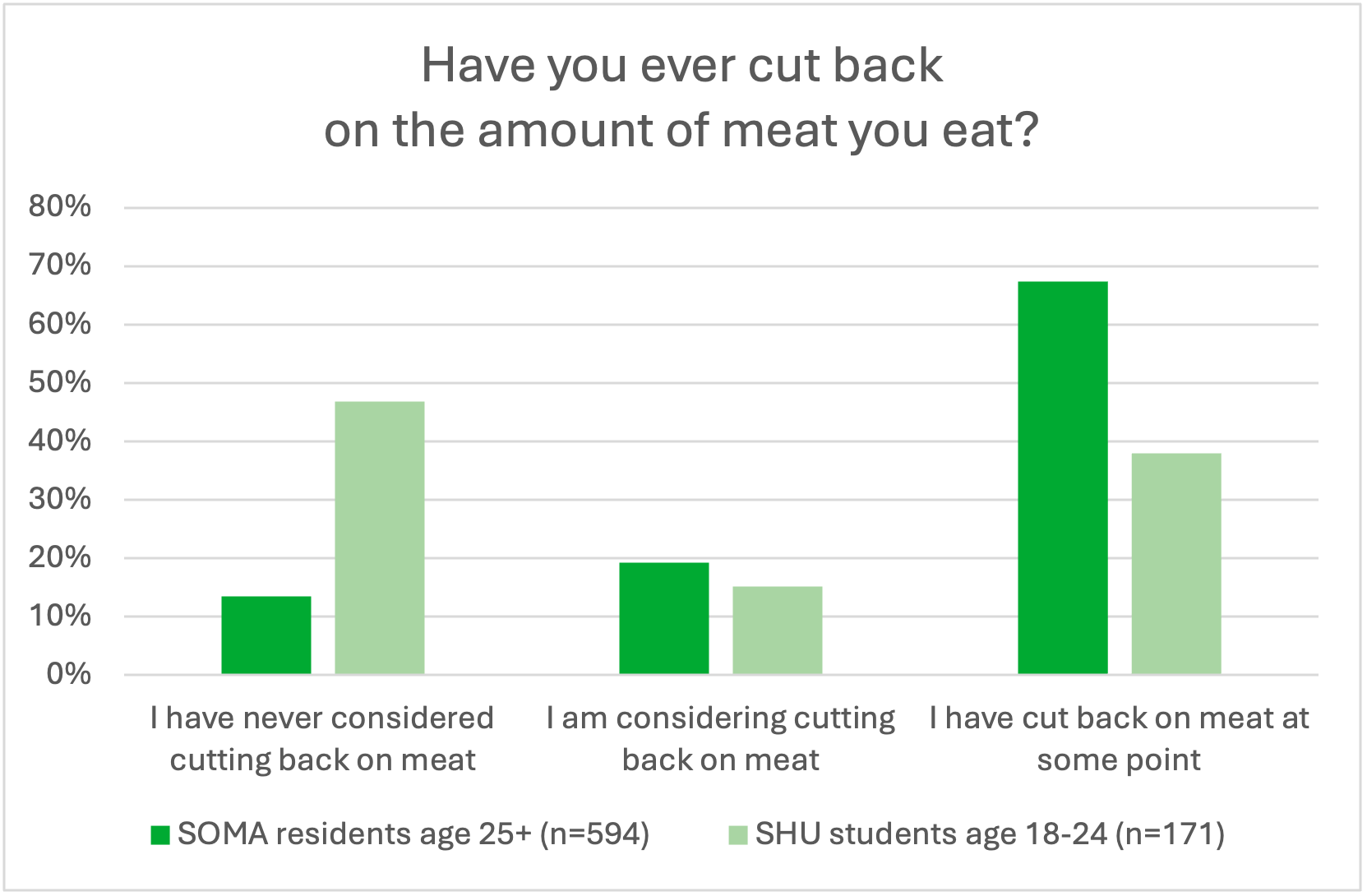
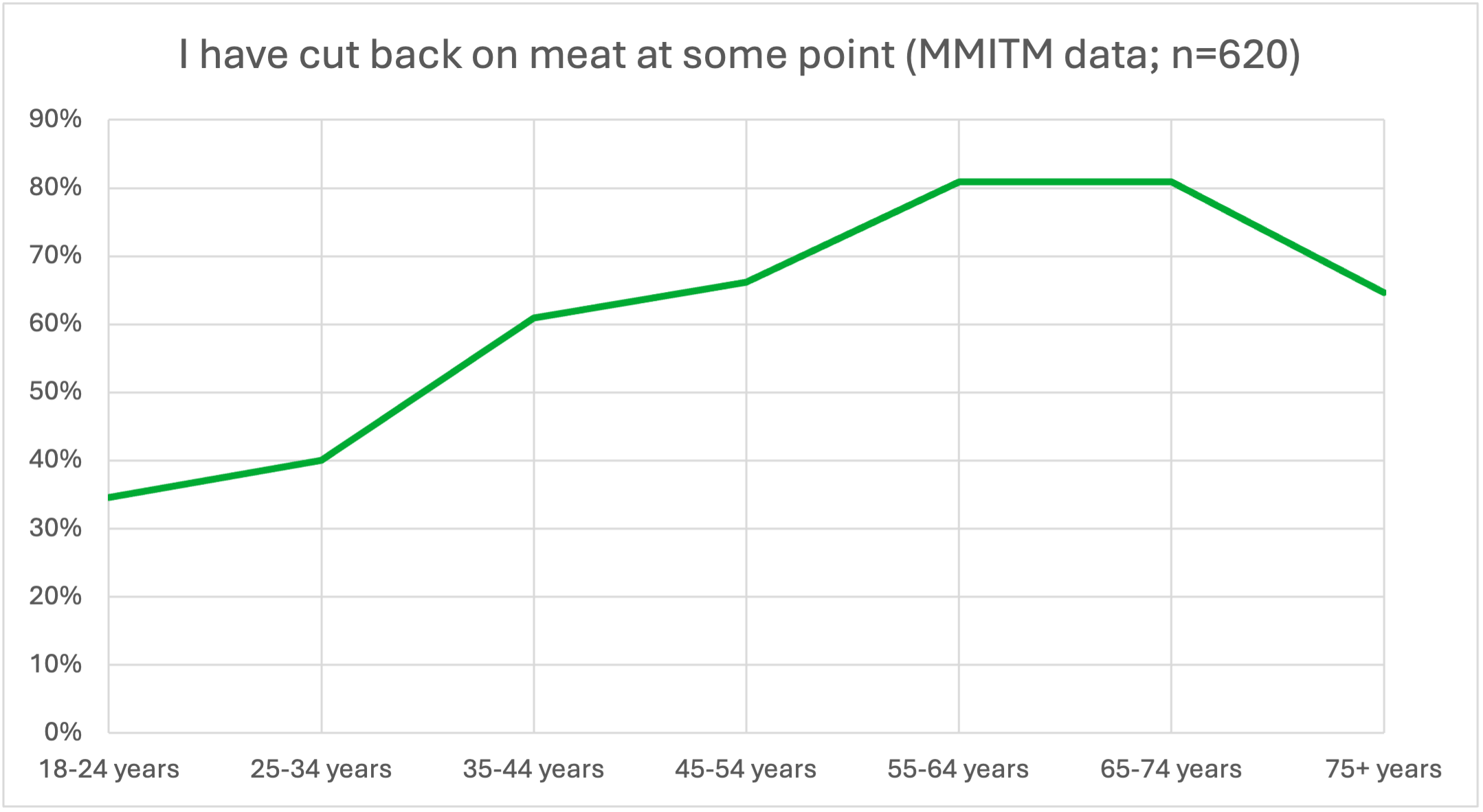
This difference could be simply a matter of experience: The longer we live, the more things (like diet change) we are likely to have tried. MMITM’s data across age groups supports this hypothesis: each successive age group was equally or more likely to report having cut back on meat at some point (with the exception of respondents over age 75).
meat’s environmental impact: awareness/motivation gap
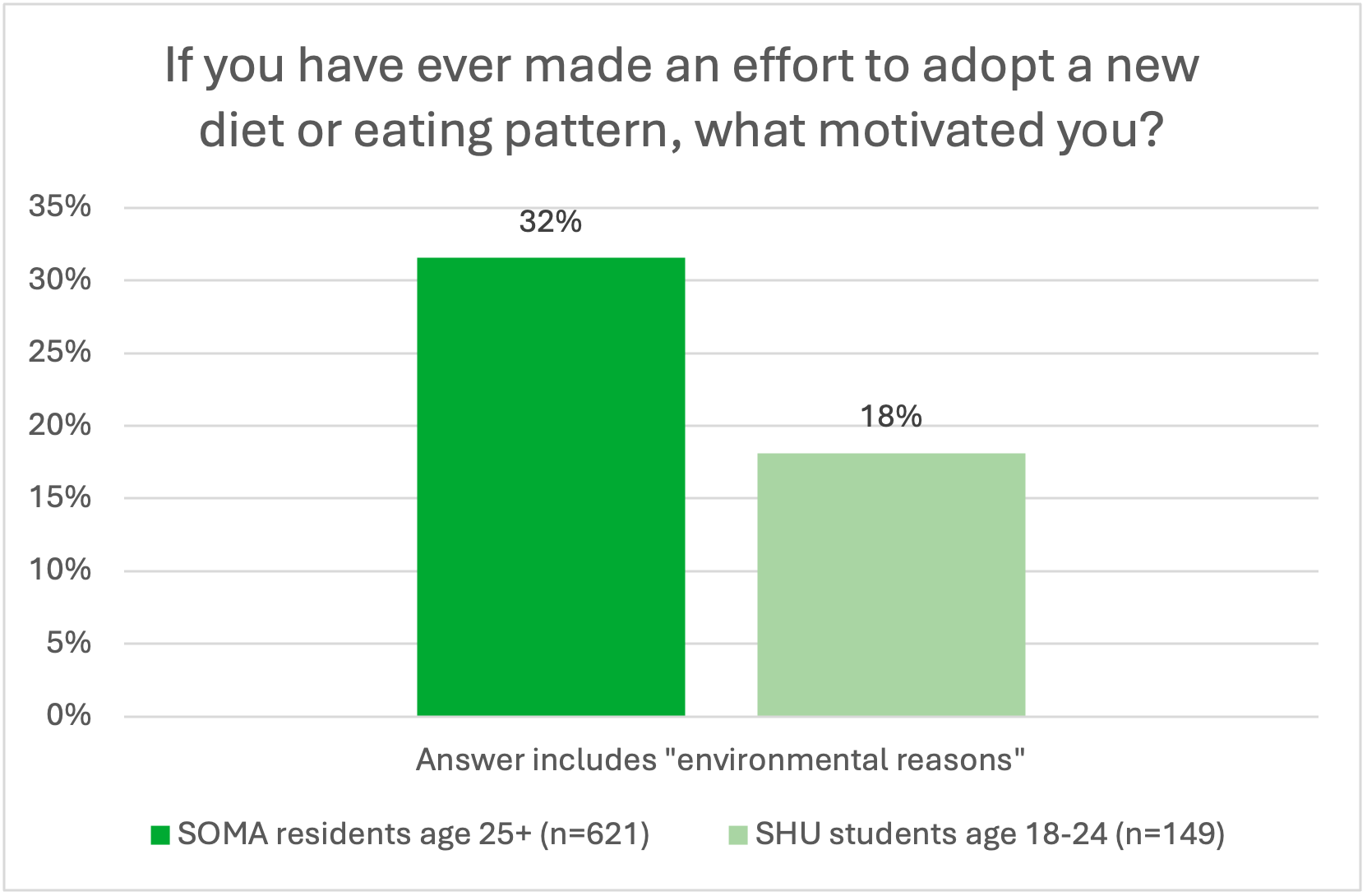
Among survey respondents who had ever made an effort to adopt any new diet or eating pattern, the biggest motivations were the same in both the student and older cohorts: health and weight concerns, and saving money. However, the older group’s members were almost twice as likely to cite “environmental reasons” for their diet changes than the younger group’s members. This was surprising, given most young American adults’ concern about climate change, as cited above.
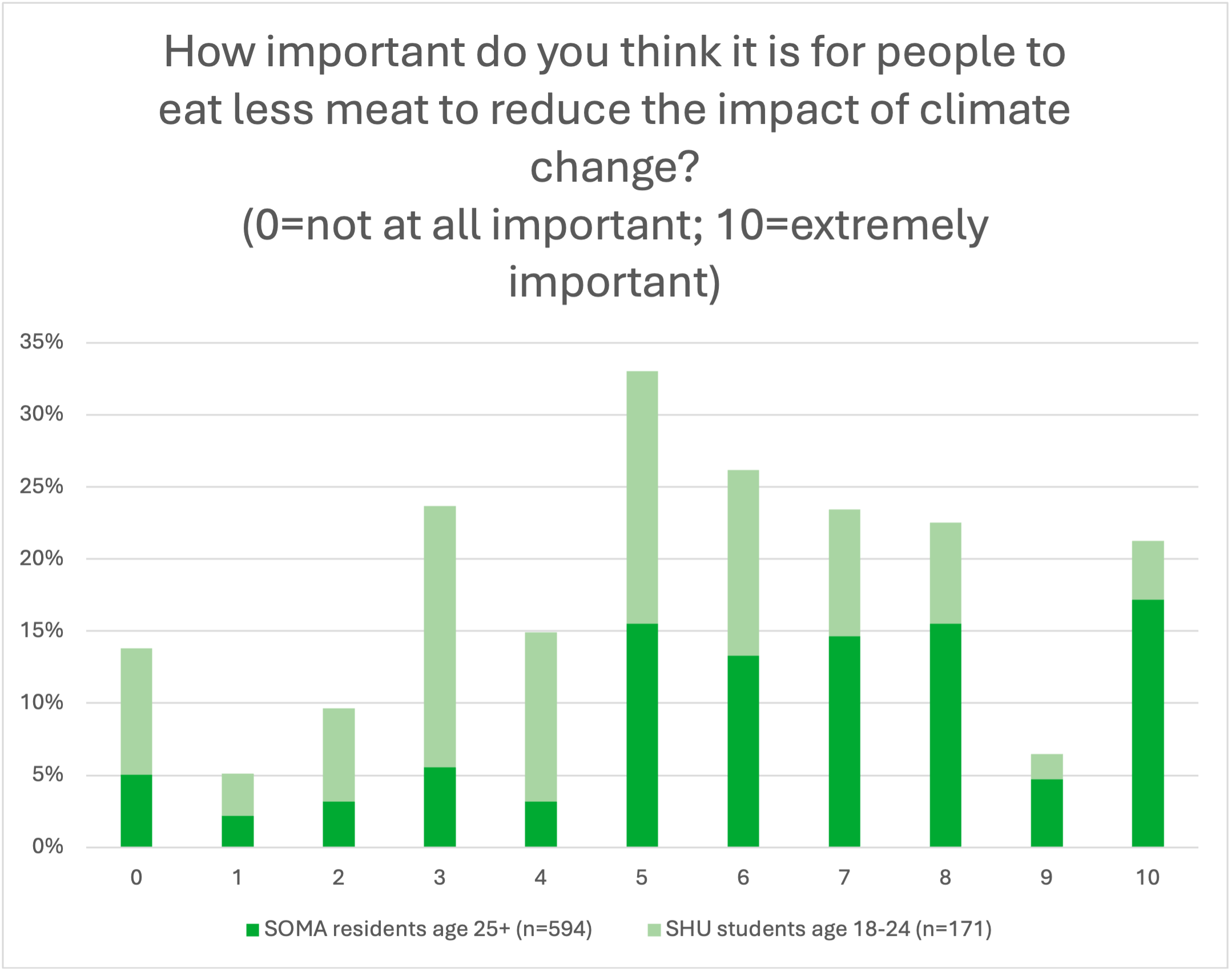
This lesser attention to the meat/environment connection among the student cohort becomes even clearer with responses to a following question, “How important do you think it is for people to eat less meat to reduce the impact of climate change?”. On a scale of zero (not at all important) to 10 (extremely important), the students’ responses clustered around 3-6, whereas the older group’s responses clustered around 5-8. The older respondents were four times as likely as the students to respond with a 10.
Furthermore, when asked, “Are you concerned about the environmental impacts of the meat industry?”, only slightly more than half (54%) of the 18- to 24-year-olds in the SHU survey replied unconditionally “yes.” (The MMITM survey did not ask this question.)
This signals a gap in awareness and/or motivation. Perhaps the SHU respondents were not aware that meat (and dairy) contribute more than plant-source foods to the greenhouse gas emissions that drive climate change. Perhaps they did not believe that their individual diet choices can make a difference against climate change, or they found that making planet-friendly food choices conflicted with other interests (such as taste or convenience), their cultural practices, or their beliefs around nutrition.
acting on the findings
Regardless of whether there is a gap in knowledge, motivation, or both, Meat Me In The Middle understood from the SHU survey that there is an opportunity to influence students’ meat consumption for the benefit of the environment. Tamiya, Elizabeth, and Roselyn offered several recommendations based on their data:
- The SHU dining hall can expand its non-meat options, and make those options “look more appealing rather than looking dried out under a heating lamp,” as the students described meatless foods’ current presentation. The dining hall can also display messaging about the health and environmental benefits of meat reduction. The students suggested MMITM could play a role in encouraging these changes.
- The university community can draw on its embrace of Pope Francis’ teachings on Catholics’ responsibilities to the environment, enshrined in his Laudato Si′ and Laudate Deum publications, to promote sustainable food choices.
- MMITM can increase its communications and interactions with students, including in collaboration with SHU’s Sustainability Action Club.
- MMITM’s efforts to encourage more non-meat options in South Orange and Maplewood restaurants will benefit students who eat off campus, in addition to the larger community.
MMITM is grateful for the interest and efforts of Elizabeth, Roselyn, Tamiya, and Dr. Weger. Their findings broaden our understanding of what might motivate young adults to change their diets. We look forward to continuing our collaboration with members of the Seton Hall University community, with the goal of inspiring and enabling everyone in South Orange and Maplewood to make planet-friendly food choices.